
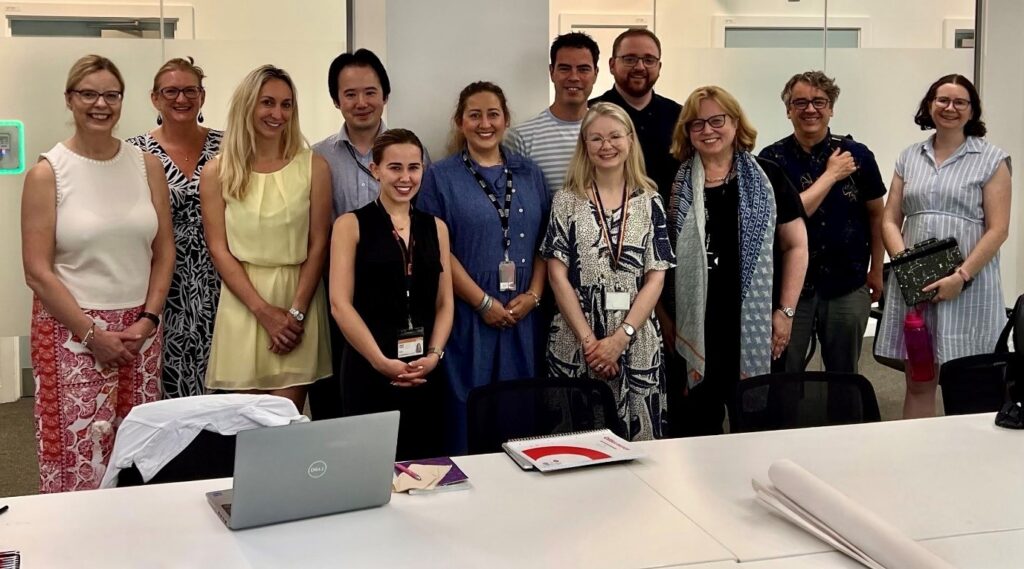
Reflections from the Bloomsbury Learning Exchange Distance Learning Administration Network meeting by co-chair, and our Head of Programme Support, Gustavo Olivo.
How do course administrators build professional identity, collaborate effectively with academics, and ensure their essential work is recognised? This post shares key insights from the recent Distance Learning Administration Network event, where colleagues from across the University of London came together to explore these questions. Whether you’re a course administrator, academic, or digital education professional, you’ll find practical ideas on training needs, partnership working, and building a more inclusive and supportive culture in distance learning.
A space for connection and growth
Course administrators from across of University of London’s federation members met on 19th June, for the second Bloomsbury Learning Exchange Distance Learning Administration Network meeting. Created earlier this year by Sarah Sherman (Director of the Bloomsbury Learning Exchange (BLE) and CODE Fellow), the network was established to give distance learning support staff a dedicated space to connect, reflect and develop. It is co-chaired by Joanne Jarvis (CertAVP Administration Manager, RVC), Ruth Chandler (Course Manager, RVC), and me, Gustavo Olivo (Head of Programme Support, University of London Worldwide).
The event welcomed colleagues from UCL, University of London, Royal Veterinary College (RVC), London School of Hygiene and Tropical Medicine, Royal Holloway, and City St George’s. The event was divided into two themes: exploring our training and development needs, and building effective partnerships with academics in distance learning contexts.
Exploring training needs: Recognising our skills and gaps
The first half of the session was led by Julian Bream, BLE Coach for Digital Leadership. His interactive exercise encouraged attendees to reflect on the core tasks, skills and behaviours that define our roles, and to identify areas where more structured training and development could help.
Working in pairs, participants drew a representation of their role and annotated it with tasks, competencies and challenges.
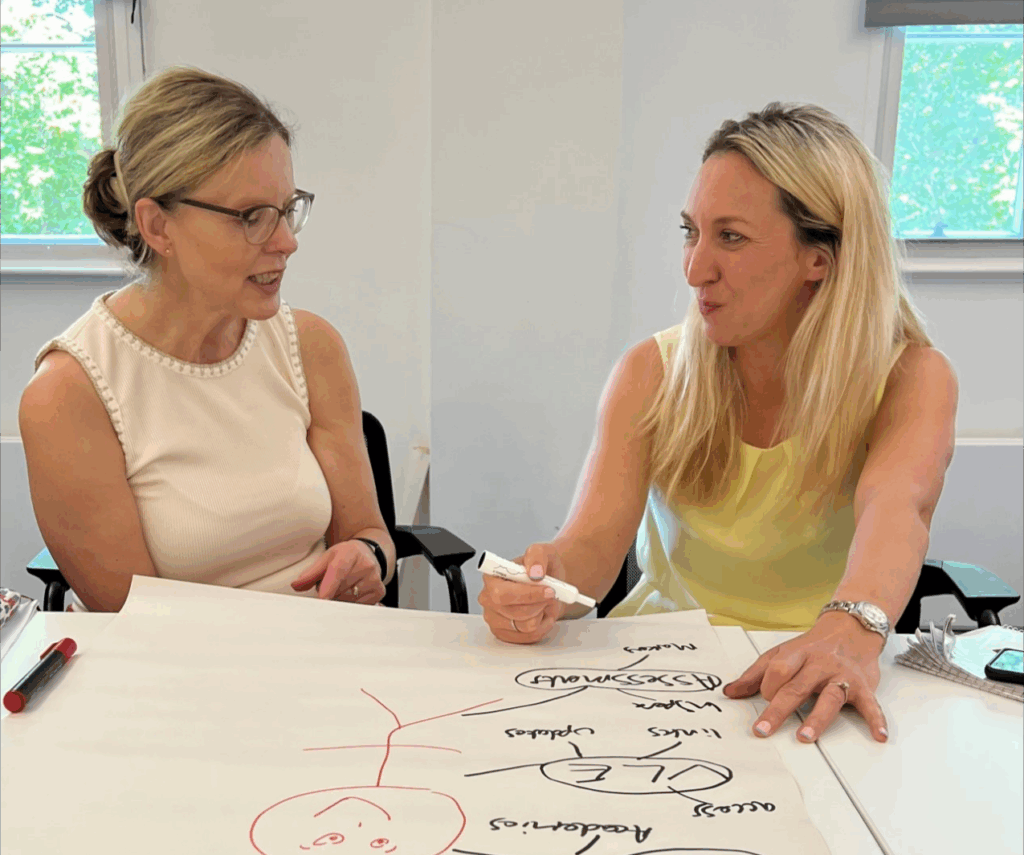
Unsurprisingly, the results painted a picture of highly versatile professionals: managing virtual learning environments, liaising with students and teaching centres, organising events, supporting academics, assessments and graduation, and navigating complex communications with multiple stakeholders.
Skills like organisation, communication, empathy, and attention to detail emerged as essential. But many also reported being asked to perform tasks, such as HTML editing or platform troubleshooting, without sufficient training. There were concerns about unclear team boundaries, overlap in responsibilities, and assumptions that staff simply “figure it out”.
Participants suggested that professional development often happens informally, through peer exchange or self-teaching. “Talking to a colleague doing the same job at another university can completely change how you think about a task,” someone noted. Others emphasised that new technologies, such as AI tools for transcription or data analysis, are often underutilised, not due to lack of interest, but lack of visibility and training opportunities.
Behind the scenes but essential: The work of course administrators
If you do your job well, it’s invisible.
Some colleagues reflected that their work only became visible when something went wrong, or during major disruptions like the COVID-19 pandemic. That’s when years of careful process-building suddenly became essential.
There was also a heartfelt recognition that many of us do far more than our job descriptions suggest, because we care deeply about students, academics, and the quality of our programmes. But doing things “the way they’ve always been done” can become a barrier to growth if we don’t make space to reflect and adapt.
Working better together: Building academic-admin partnerships
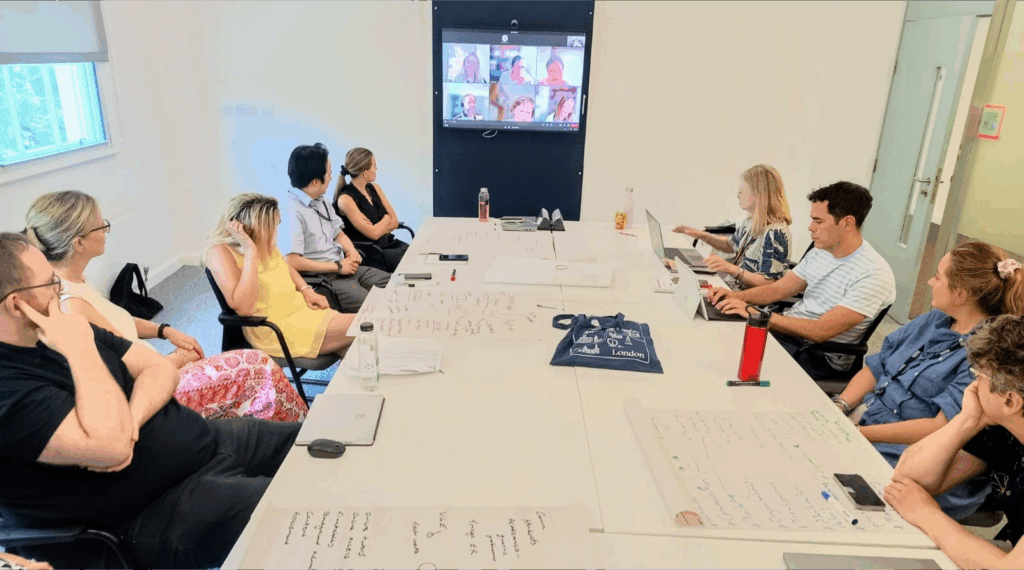
In the second part of our session, we turned our attention to the relationship between course administrators and academics. This built on our first network event earlier in the year, where we focused on our relationships with students.
We were joined by Lynne Roberts (Programme Director, International Foundation Programme) and Jessica Hancock (Programme Director, PG Cert in Learning and Teaching in Higher Education), who shared their experiences and responded to questions from the group.
The session opened with a recorded talk from Donna Smith (Senior Lecturer and Staff Tutor, Open University), who outlined best practices for effective collaboration between support staff and academics in a distance learning setting.
Principles of Good Collaboration
Donna highlighted several key principles:
- Clear role definitions – knowing who does what, and where boundaries lie.
- Collaborative planning – involving support staff early in course development.
- Consistent communication – using shared platforms and agreed norms.
- Regular check-ins – to flag issues and align priorities.
- Mutual feedback – encouraging open, constructive dialogue in both directions.
She also advocated for joint professional development, shared onboarding, and regular opportunities to build empathy across roles.
From silos to synergy: Breaking down cultural barriers
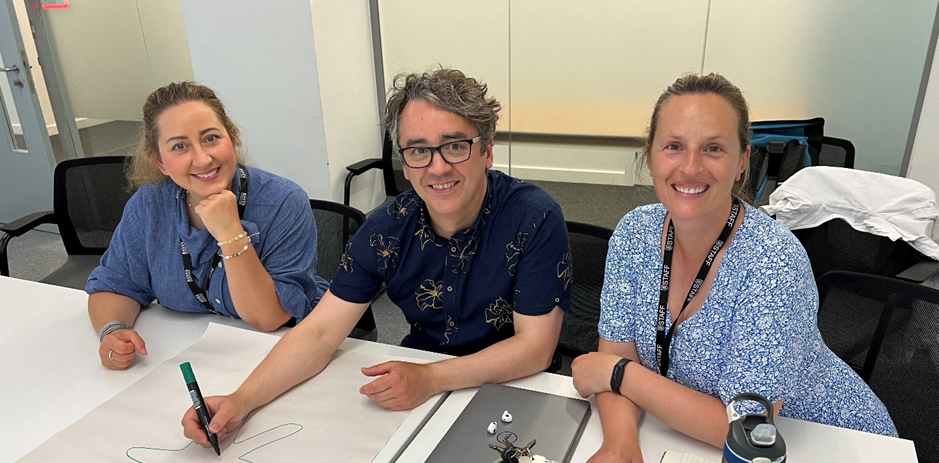
During the discussion, colleagues questioned the ‘us vs them’ dynamic that can sometimes be reinforced by labels like ‘academic’ or ‘support staff’. Several mentioned that they had closer working relationships with academics than with other admin colleagues, and that strong communication was the key to successful collaboration.
One colleague shared a past experience at a non-London institution, where hierarchical structures had reinforced a clear divide between academics and professional services staff. While this wasn’t reflective of the University of London, it sparked useful discussion about how institutional culture can shape working relationships. The colleague was quick to contrast that experience with what they’d seen in more inclusive environments, highlighting UCL as an example, where administrators and academics are viewed as part of the same team.
Visibility, appreciation and voice
A recurring theme was the importance of recognising the often unseen work that goes into distance learning administration. Jessica and Lynne encouraged colleagues to use appraisals and check-ins as opportunities to highlight achievements, not just look ahead.
Lynne reminded attendees not to shy away from naming their successes: ‘It’s not boasting, it’s essential. You might be doing incredible work behind the scenes, don’t assume others know about it’. She also encouraged staff to speak up about their training needs, as senior staff aren’t always aware of what support might be helpful.
Jessica noted how helpful it was when admin staff were proactive and kept her informed of upcoming tasks, especially during peak periods.
Final reflections
As the session drew to a close, we discussed the importance of inclusive practices, not just for students, but for staff too. Accessibility, wellbeing, clear processes and professional respect all play a role in creating a healthy working culture.
It was heartening to see so many colleagues echoing the same values: empathy, communication, collaboration, and a desire to learn.
The Distance Learning Course Administrators Network continues to provide a much-needed space to reflect on our roles, share practice, and advocate for the recognition and support we deserve.
Join the mailing list
To learn more about Bloomsbury Learning Exchange, join us at an upcoming event, or keep up with the latest news by signing up to our brand new Jisc mailing list.