

The Digital Education Reading Group is back after the summer break and we’re delighted to welcome Ariana Kaleta, Programme Liaison Librarian, as our facilitator. Ariana has brought together three thought-provoking resources exploring pedagogies of care, belonging and humanistic approaches to education, and what these ideas might mean in asynchronous and digitally mediated learning.
Many thanks to Ariana for putting together such a rich theme for our return after the break. We’re looking forward to getting the group back together and hearing where the discussion takes us. Below, Ariana introduces the theme and sets out some questions to get us thinking ahead of the session.
How do we communicate care to students we may never meet?
Distance education gives learners the freedom to study in ways that fit around their lives, but it can also make the human connections that support learning harder to build. There is no classroom in which the teacher may notice confusion, withdrawal or uncertainty. Instead, a student’s experience of the university is assembled through a patchwork of online interactions: an online learning platform, an assessment brief, an email, a recorded lecture, a library interface, a piece of feedback or an interaction with student support.
So where in that experience does care reside?
For this session, we’ll explore the idea of a pedagogy of care and what it might mean in predominantly asynchronous, digitally mediated education.
I’ve selected three sources.
In her 2023 paper, Greer argues that the emotional dimensions of learning don’t disappear online. Care can be deliberately built into course design through clarity, flexibility, dialogue, meaningful feedback and opportunities for students to support one another. Yazdani (2024) widens the perspective, connecting care with belonging, cultural awareness, inclusion and participation, asking us to consider who actually feels represented, welcomed and able to participate. In the L&T Chat Show podcast (2026) the discussion of a humanistic pedagogy brings people, place, compassion and power into the conversation.
Together, the three resources invite us to think about care as something that might (or might not) be visible in the design, systems, technologies and everyday interactions through which students experience a university.
Reading and listening
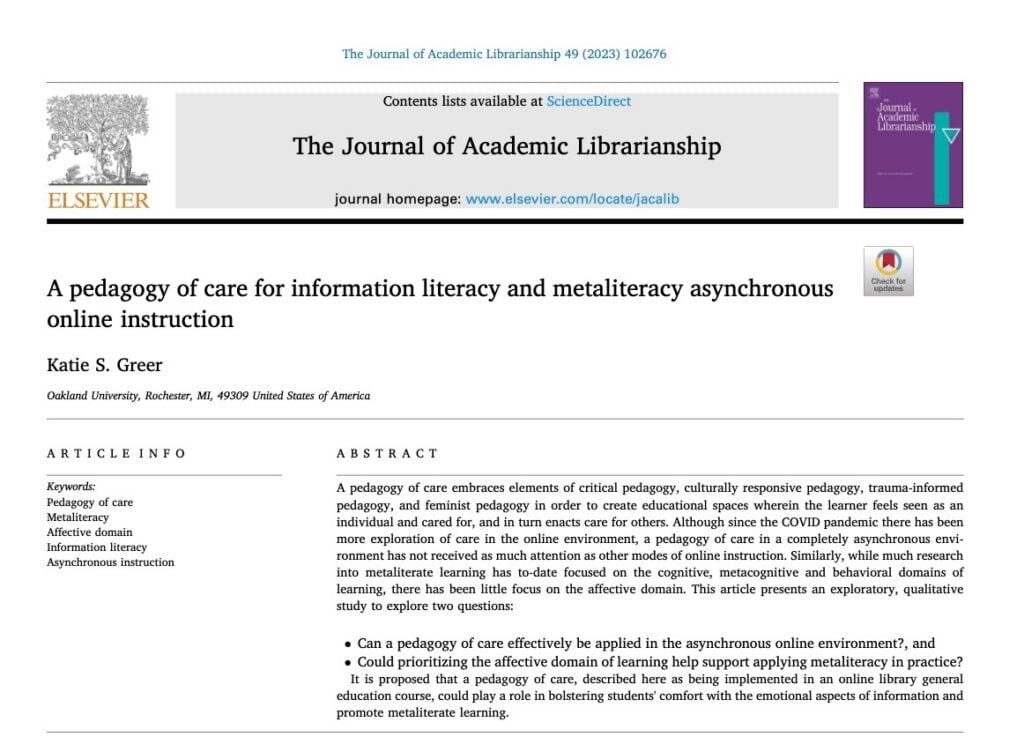
Greer, K.S. (2023)
A pedagogy of care for information literacy and metaliteracy asynchronous online instruction
The Journal of Academic Librarianship
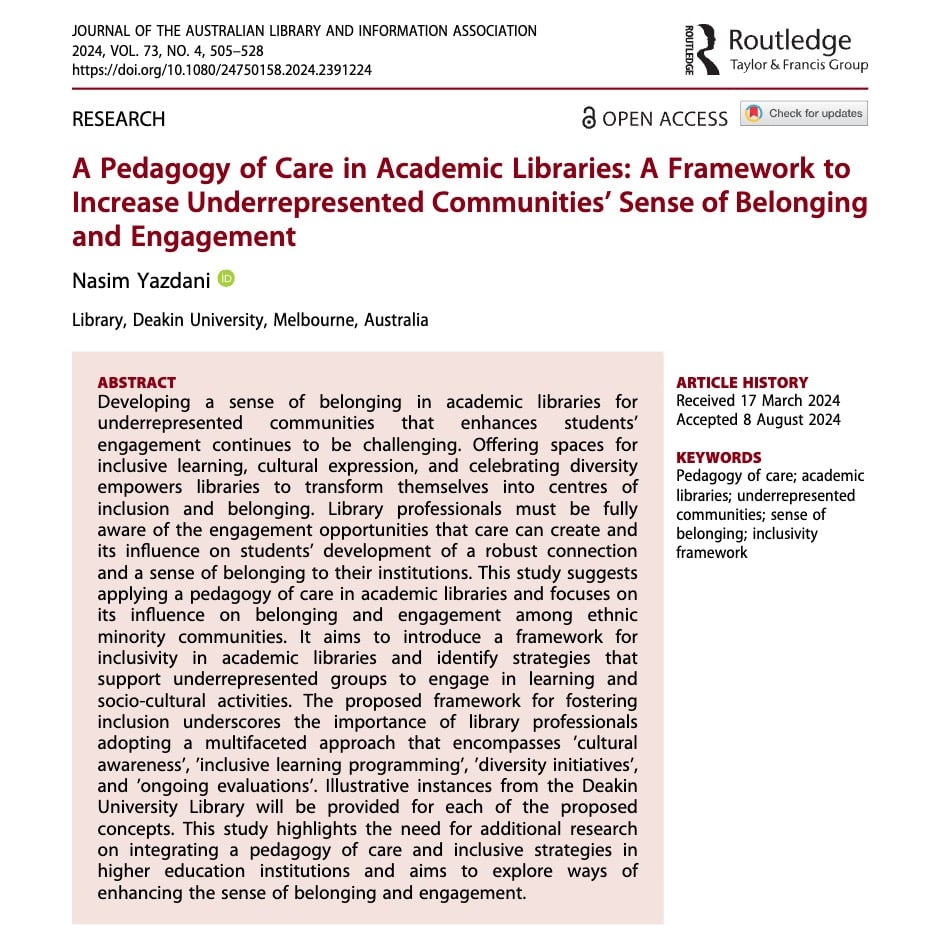
Yazdani, N. (2024)
Journal of the Australian Library and Information Association
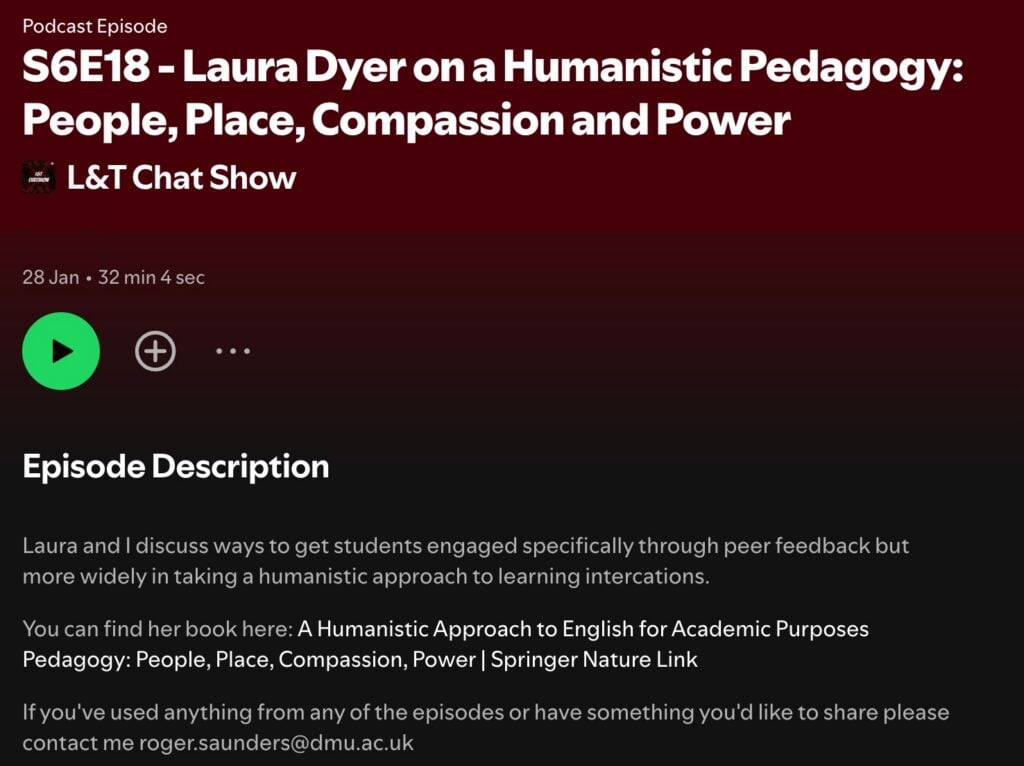
Dyer, L. and Saunders, R. (2026)
Laura Dyer on a humanistic pedagogy: People, place, compassion and power
L&T Chat Show Podcast.
Join us to consider
- How can a pedagogy of care be created effectively in the asynchronous online environment?
- What does a humanistic approach to distance education look like?
- Who gets to define care? Are we responding to students’ expressed needs, or our assumptions about them?
- Can care scale? What can technology genuinely contribute, and what still requires human attention and judgement?
- Where are the limits? How do we create compassionate experiences without relying on unsustainable emotional labour from staff?
Reflective Question: If a student encountering significant personal, academic, or accessibility challenges enrolled with us today, what aspects of the course would help them succeed, and what barriers might still stand in their way? Where would they encounter evidence that somebody had thought about them and where might they encounter indifference?
Come ready to share examples, counterexamples and experiences from your own area of practice.
Looking forward to hearing your reflections and perspectives, Ariana.
