This month, we look beyond surface-level approaches to decolonisation and reflect on what meaningful transformation requires in curriculum design, digital education and institutional practice.
Author: Anna Armstrong
A behind-the-scenes look at MATRICULATE, a tool we designed to streamline microcredential assessment. By automating key workflows, it reduces administrative workload and supports scalable marking across multiple courses.
This month, we revisit the question: what difference, if any, does learning technology actually make? Drawing on Clark, Kozma, and key philosophical perspectives we consider its relevance in the age of AI and digital platforms.
This month we explore digital wellbeing for staff. We’ll reflect on how digital practices affect our working lives and share experiences of what helps and what challenges wellbeing in our workplace.
This month we explore what digital equity means for transnational students, drawing on student voice research to reflect on how online education is experienced across diverse global contexts.
A lively critical discussion on the Community of Inquiry framework prompted fresh questions about presence, participation, and what community really means in digital learning. Key insights from November’s reading group.
December’s reading group draws on classic and emerging research to understand how humans and AI can work together to enrich educational practice and explore what makes the best human–AI team for learners.
This month we’ll examine the Community of Inquiry framework (2000) alongside Xin’s (2012) critique, exploring why CoI became so influential, its practical strengths, and the risks of oversimplifying complex online learning.
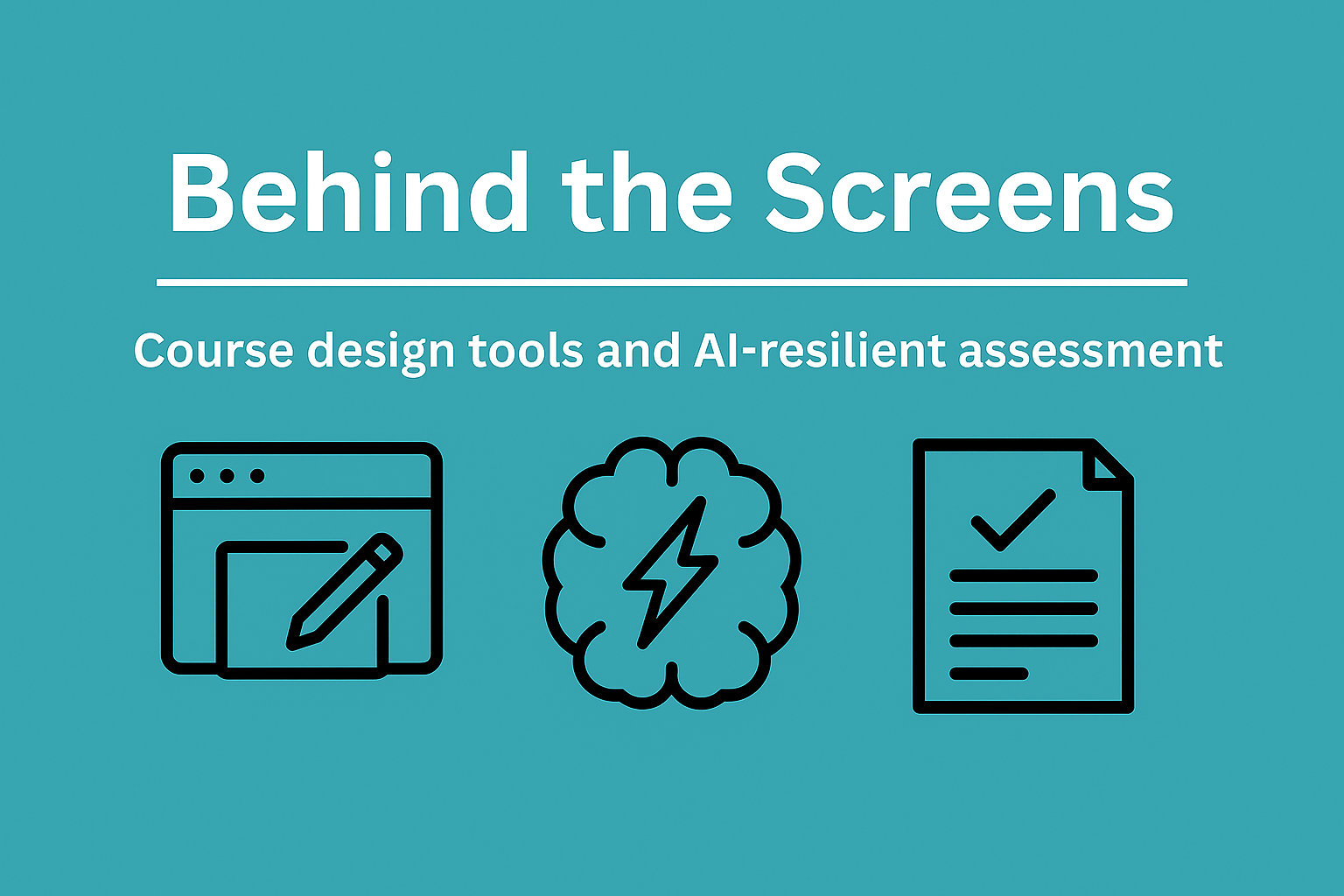
A behind-the-scenes look at how we used Coursensu for AI-supported course design and a portfolio-based assessment model that makes student use of AI transparent and constructive.
A behind-the-scenes look at how colleagues are using the Canvas API and AI to solve problems, create content, and share practical innovations in digital education.