
Digital education reading group: December 2025
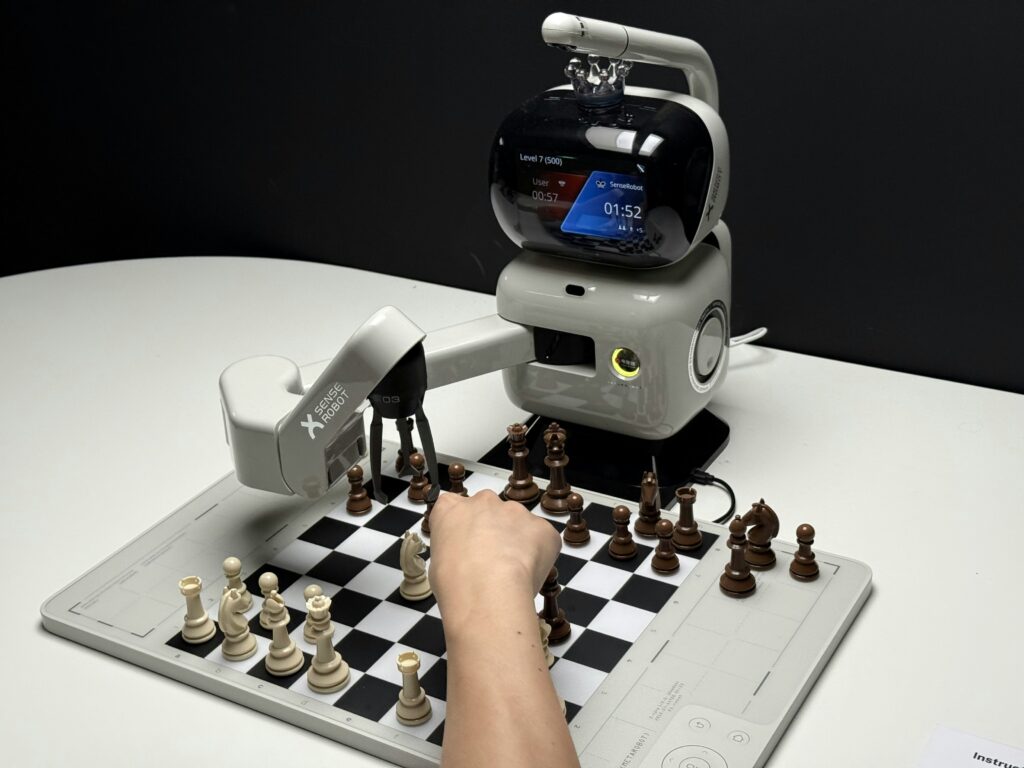
December’s meeting draws on classic and emerging research to understand how humans and AI can work together to enrich educational practice and explore what makes the best human–AI team for learners.
Bloom’s classic 2 Sigma Problem showed us that one-to-one tutoring can produce excellent results, largely because of the personalised feedback, adaptive pacing and close guidance that tutors provide. More recently, studies such as Fakour and Imani’s comparison of ChatGPT and human tutors show a new landscape: while humans continue to excel at nuanced feedback, emotional support, and deeper inquiry, learners appreciate AI for its non-judgmental stance, constant availability, and flexible pacing. However, Rahmani et al.’s research into online education dropout rates reminds us that learning is not driven only by instruction; learner motivation, course design and human support strongly shape whether students persist, and these are areas where AI still falls short. Meanwhile, Wang et al.’s work on AI language-learning coaches adds nuance, revealing that learners respond differently depending on how “present” the AI feels, with cognitive presence enhancing enjoyment but teaching presence sometimes diminishing outcomes.
Taken together, these findings invite us to return to Bloom’s central question: if one-to-one tutoring is so powerful, how might we offer something comparable at scale? With the evolution of AI-driven study companions, it is tempting to imagine that we have finally found the solution Bloom was searching for. Yet the emerging evidence suggests that AI alone cannot replicate the full spectrum of human support that underpins meaningful learning. The more realistic possibility, and the one we will explore, is whether a carefully designed partnership between humans and AI could move us closer to those two-sigma gains, combining the strengths of each in ways neither could achieve alone.
Reading
Bloom, B. S. (1984). The 2 Sigma Problem: The Search for Methods of Group Instruction as Effective as One-to-One Tutoring. Educational Researcher, 13(6), 4.
Fakour, H., & Imani, M. (2025). Socratic wisdom in the age of AI: a comparative study of ChatGPT and human tutors in enhancing critical thinking skills. Frontiers in Education, 10.
Rahmani, A. M., Groot, W., & Rahmani, H. (2024). Dropout in online higher education: a systematic literature review. International Journal of Educational Technology in Higher Education 2024 21:1, 21(1), 19.
Wang, X., Pang, H., Wallace, M. P., Wang, Q., & Chen, W. (2024). Learners’ perceived AI presences in AI-supported language learning: a study of AI as a humanized agent from community of inquiry. Computer Assisted Language Learning, 37(4), 814–840.
Full article available with your University of London library credentials.
For discussion
1. Which aspects of learning are best supported by humans, by AI, or by a deliberate partnership between the two?
Consider Bloom’s evidence that humans provide rich feedback and motivation, alongside findings that students value AI for availability and non-judgemental practice.
Where do you see the most productive division of labour?
2. How should we design learning environments that minimise risk (e.g., dropout, mis-learning, inequity) while maximising the strengths of AI companions?
Rahmani et al.’s review shows that dropout is strongly shaped by motivation, support structures, course design, and technology quality. What human–AI configurations could strengthen motivation, reduce cognitive load, or improve support for diverse learners?
3. What does “human presence” mean when learners increasingly interact with AI tutors, and how much of that presence can or should be simulated?
Wang et al. show that learners perceive social and cognitive “presences” in AI, sometimes improving engagement, yet “teaching presence” from AI can reduce learning outcomes. How do we decide which aspects of presence AI should take on, and which must remain human for educational, ethical, or relational reasons?
Looking forward to hearing your thoughts and ideas. Let me know if you have any questions or need help accessing the materials.
Anna
List of topics discussed at previous meetings
Note: Parts of this blog post were developed with the assistance of AI (ChatGPT) to help refine wording and structure. All final content was reviewed and edited by the author.
