December’s reading group draws on classic and emerging research to understand how humans and AI can work together to enrich educational practice and explore what makes the best human–AI team for learners.


at the University of London
December’s reading group draws on classic and emerging research to understand how humans and AI can work together to enrich educational practice and explore what makes the best human–AI team for learners.

This month we’ll examine the Community of Inquiry framework (2000) alongside Xin’s (2012) critique, exploring why CoI became so influential, its practical strengths, and the risks of oversimplifying complex online learning.
A behind-the-scenes look at how we used Coursensu for AI-supported course design and a portfolio-based assessment model that makes student use of AI transparent and constructive.
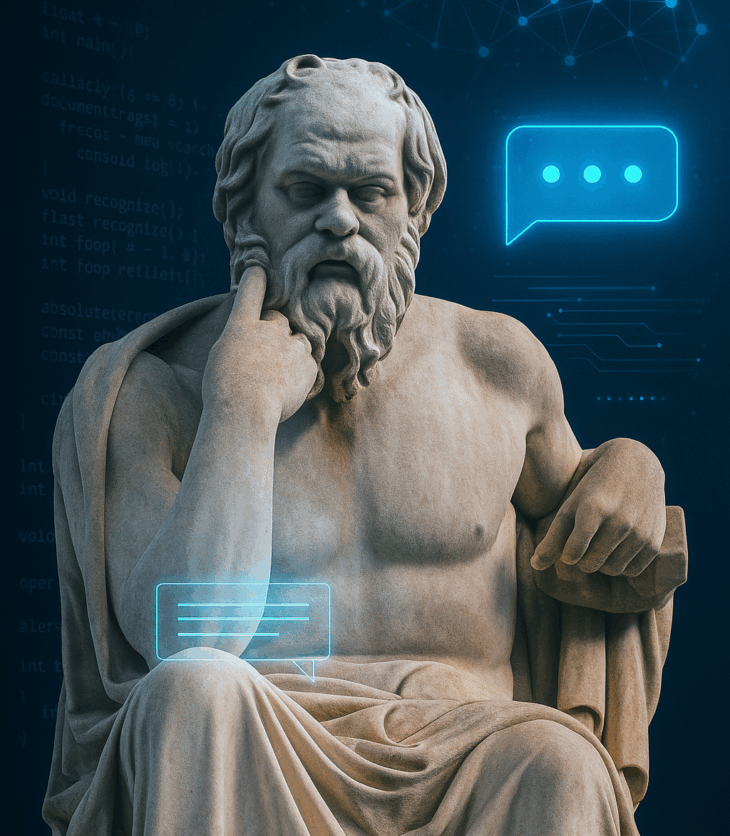
We recently explored how AI-powered Socratic dialogues can offer a new, scalable approach to fostering personalised reflection and deeper learner engagement in online education.

A behind-the-scenes look at how colleagues are using the Canvas API and AI to solve problems, create content, and share practical innovations in digital education.

Our discussion of a large-scale study on online learning design sparked critical reflections on structure, tutor presence, and what truly supports student success. Key takeaways from July’s reading group.

Leonard Houx leads July’s reading group, exploring new research that identifies specific online teaching practices that truly support student success.

This June, our Reading Group returns to playful learning. From game-based design to joyful nonsense, we’ll explore how a playful mindset can bring curiosity, connection, and care into online education.

Generative AI can streamline module development, freeing academics for high-value tasks. We share our approach and insights on balancing AI with human expertise.

This month we’ll be exploring how AI is changing our roles, and the increasingly critical role of instructional design in an AI world.